
25 pages in black and white.
We extend our heartfelt thanks to Curamus School for Autism for their support and invaluable assistance with the design of these booklets.
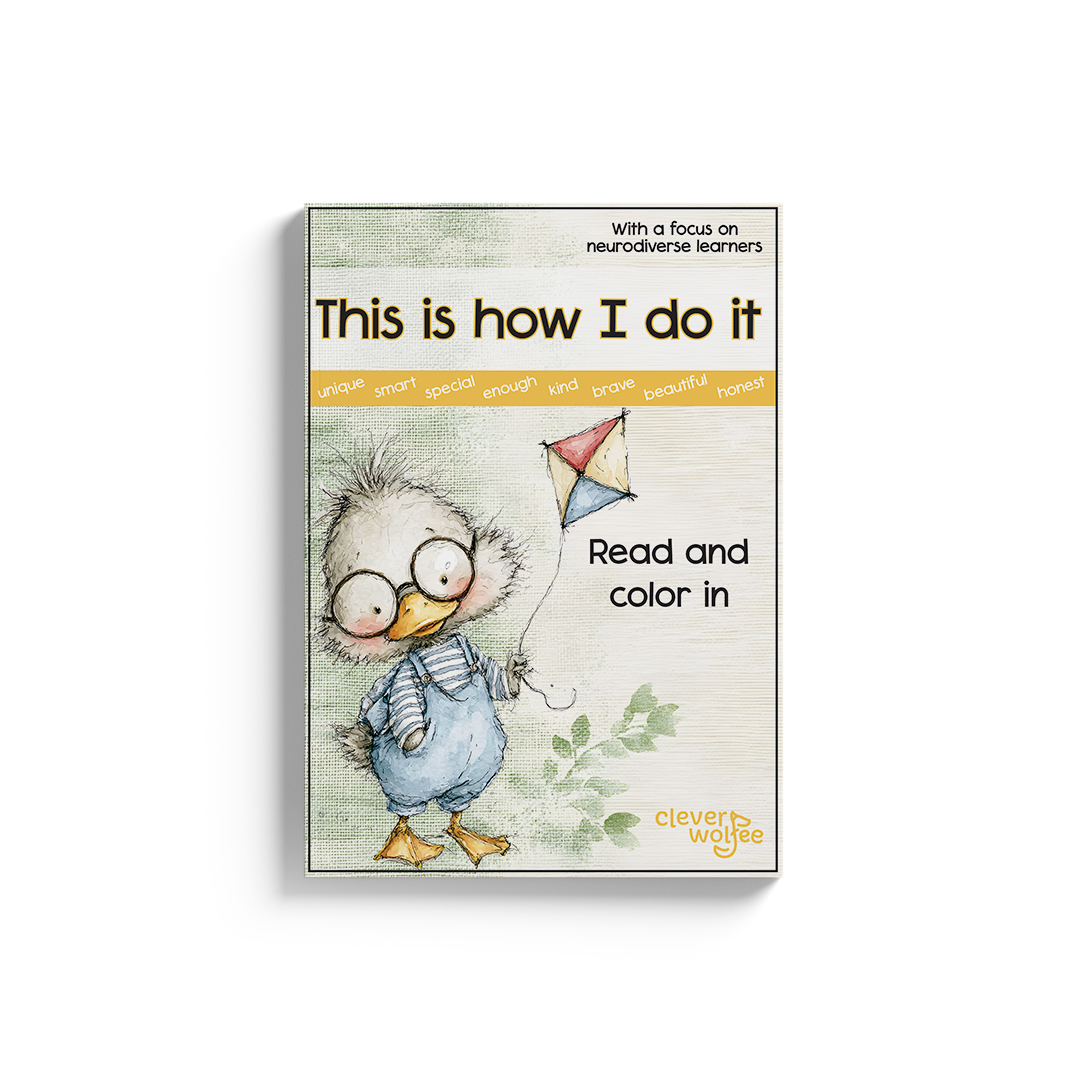
This booklet is a learning resource designed specifically for neurodiverse learners who are developing early reading skills. The aim of the booklet is to help children practise reading short sentences and understanding meaning through pictures.
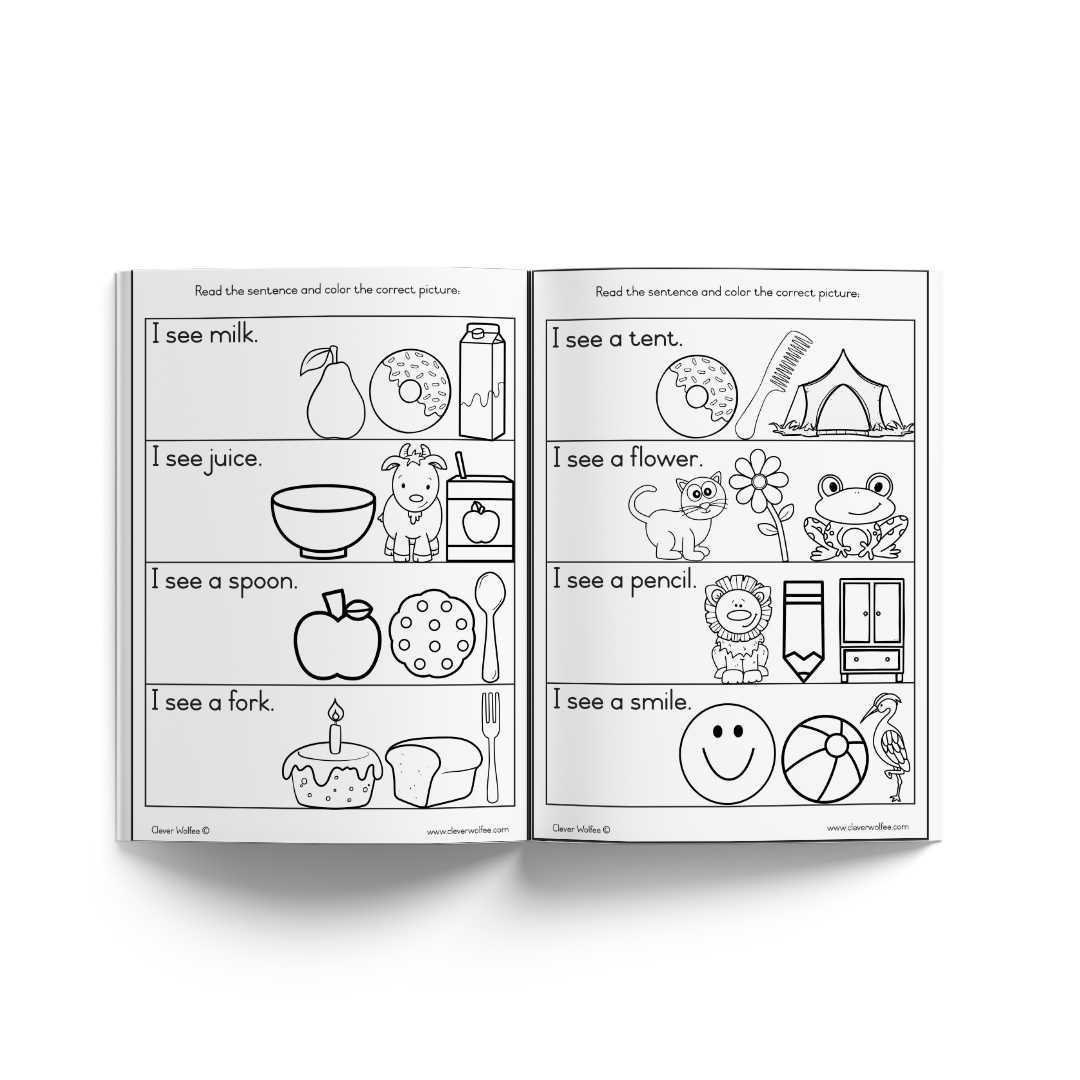
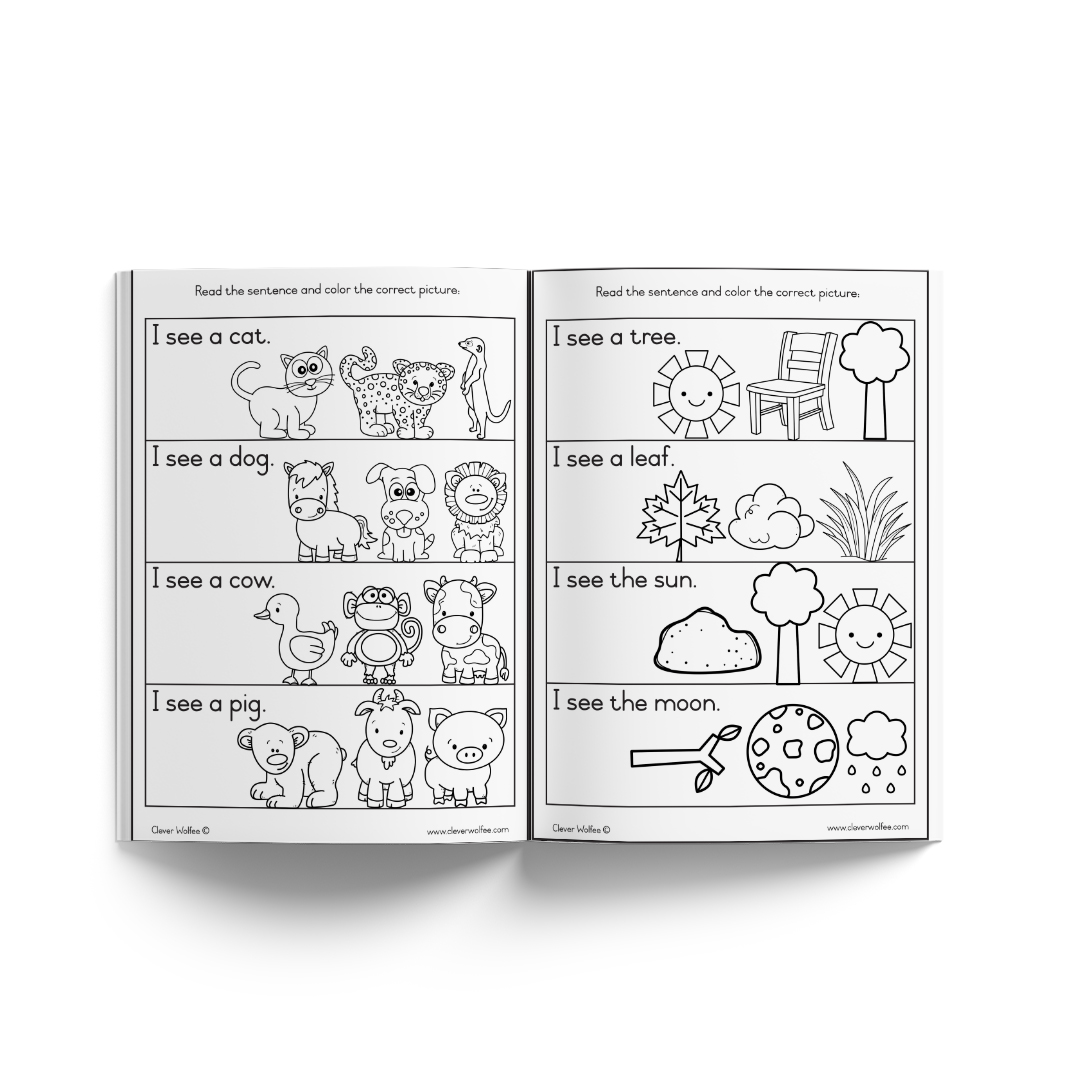
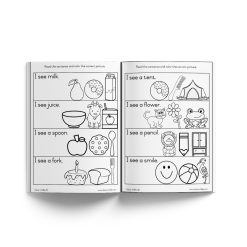
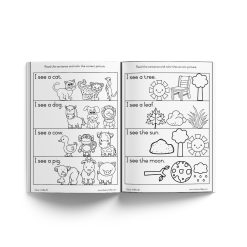
In each activity, the child reads a simple sentence and then colours the correct picture that matches the sentence. This method helps learners connect words, sentences and visual meaning, which supports comprehension and confidence in early reading.
The activities use short, repetitive sentence patterns that are easy for beginning readers to follow.
Sections / Themes included in the booklet
The booklet contains several pages where children read simple sentences and identify the correct picture to colour.
1. Animals
Children read sentences about animals and colour the correct picture.
Examples include:
-
I see a cat.
-
I see a dog.
-
I see a cow.
-
I see a pig.
-
I see a duck.
-
I see a horse.
-
I see a sheep.
-
I see a hen.
These activities help children practise animal vocabulary and sentence recognition.
2. More animals and nature
Children continue reading sentences about different animals and natural objects.
Examples include:
-
I see a goat.
-
I see a bird.
-
I see a fish.
-
I see a frog.
-
I see a rabbit.
-
I see a bear.
-
I see a lion.
-
I see a tiger.
3. Sea animals and wildlife
Children identify animals such as:
-
snake
-
whale
-
shark
-
bat
These activities expand vocabulary while strengthening reading confidence.
4. Nature and environment
Children read sentences related to nature.
Examples include:
-
I see a tree.
-
I see a leaf.
-
I see the sun.
-
I see the moon.
-
I see a star.
-
I see the sky.
-
I see a cloud.
-
I see the rain.
5. Places and objects
Children practise recognising everyday objects and places.
Examples include:
-
I see a house.
-
I see a door.
-
I see a window.
-
I see a bed.
-
I see a chair.
-
I see a table.
6. School and home objects
Children read sentences about common classroom and household items.
Examples include:
-
I see a lamp.
-
I see a book.
-
I see a crayon.
-
I see a ruler.
-
I see a bag.
-
I see a box.
-
I see a clock.
-
I see a board.
7. Toys and play items
Children identify toys and play objects.
Examples include:
-
I see a ball.
-
I see a doll.
-
I see a car.
-
I see a kite.
-
I see a swing.
-
I see a slide.
-
I see a teddy.
-
I see a bike.
8. Food and kitchen items
Children practise reading sentences about food.
Examples include:
-
I see an apple.
-
I see a banana.
-
I see a pear.
-
I see a cake.
-
I see a cookie.
-
I see bread.
-
I see milk.
-
I see juice.
9. People and clothing
Children identify people and clothing items.
Examples include:
-
I see a girl.
-
I see a boy.
-
I see a baby.
-
I see a mom.
-
I see a dad.
-
I see a hat.
-
I see a shirt.
-
I see pants.
-
I see a coat.
-
I see a pair of shoes.
10. Transport and other objects
Children also practise sentences about transport and other objects.
Examples include:
-
I see a bus.
-
I see a truck.
-
I see a plane.
-
I see a boat.
-
I see a taxi.
-
I see a van.
-
I see a train.
-
I see a scooter.
Benefits of this booklet for the child
These activities help develop important skills such as:
-
early reading and sentence recognition
-
reading comprehension
-
visual discrimination
-
vocabulary development
-
attention and concentration
-
fine motor skills through colouring
The clear structure of read → identify → colour helps learners practise reading in a predictable and supportive way.
Important information
This booklet is only available in black and white.
It is provided in PDF format for easy printing.
These booklets may not be resold or redistributed.
This is Booklet 4 in the series.
Only logged in customers who have purchased this product may leave a review.
Related products


Budget Folder


Budget Folder


Psychology


Psychology

Reviews
There are no reviews yet.